Product-line matrix
One reference per configuration, with quantity, selling unit, material, dimensions and pack requirements attached.
Mixed order sourcing
Coordinate pans, silicone products, tools, paper and packaging without losing the specification, approval or packing detail of each item.
BakewareLink connects your assortment brief with item-level sourcing and a shared order plan. Define the products, resolve the dependencies, then confirm what is ready to ship together.
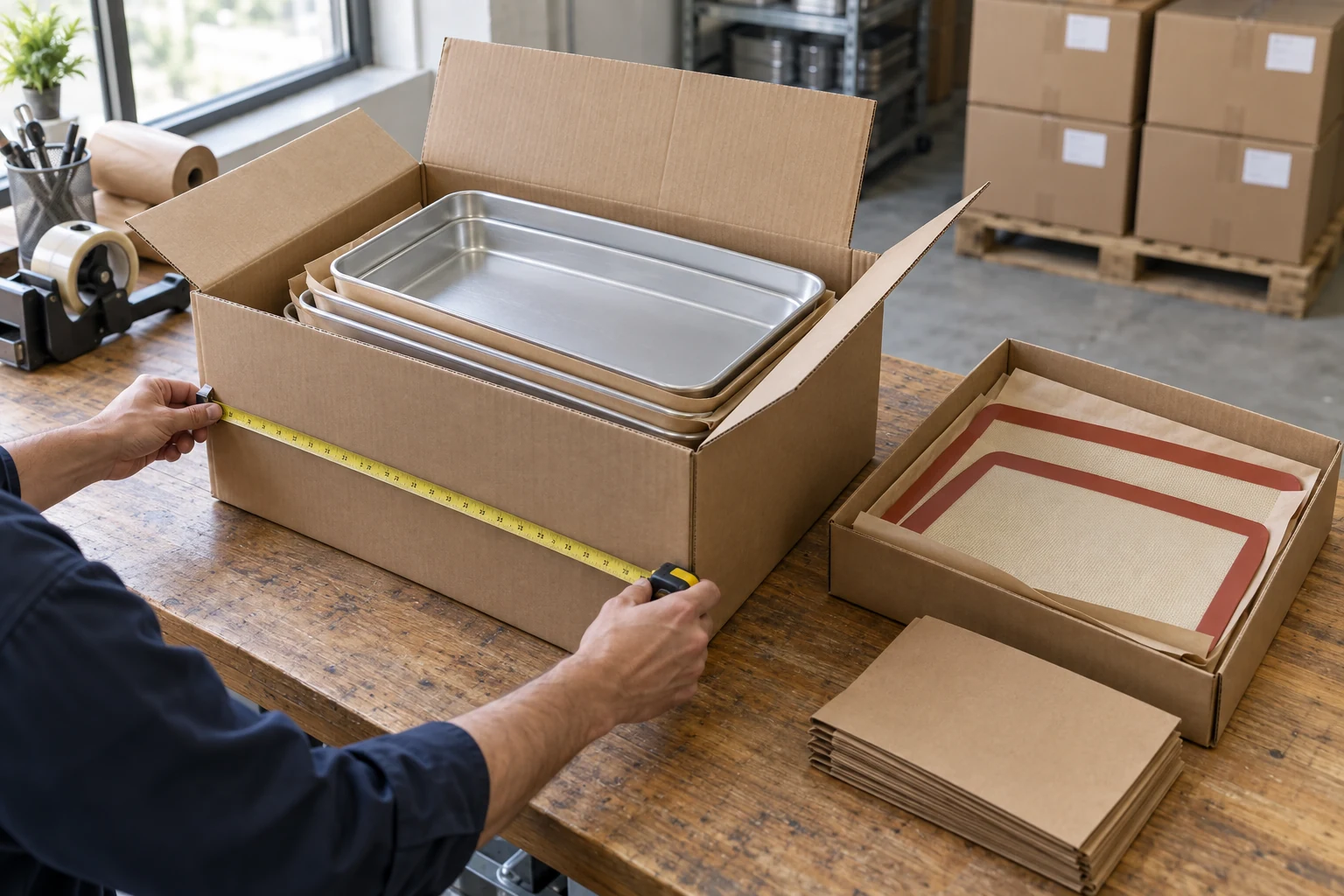
A service for coordinated assortments
A mixed order brings different product families into one buying program. It does not give them the same material, MOQ, sample process or production schedule. The working plan has to show both the individual requirements and the links between them.
This route fits distributor range expansions, private-label collections and bakery supply programs with several related items. For category selection, start with the wholesale baking supplies range.
One reference per configuration, with quantity, selling unit, material, dimensions and pack requirements attached.
Sample, artwork and complete-pack approvals, including the shared components that hold up another product line.
Item-level readiness, agreed checks, carton identification and the decision to consolidate or stage the shipments.
Agree the coordination scope before ordering. Confirm the parties and location responsible for sampling, inspection, pack assembly, consolidation, storage and shipment handling. The project quotation fixes which activities and charges are included.
01 / Define the product lines
Give each configuration its own buyer item code. A different size, color, set content or retail pack needs its own line, even when the underlying product is similar.
Record the quantity with its unit: pieces, sets, packs, rolls or weight. List a two-piece retail set as one selling configuration and state both components. Keep MOQ, sample work and printed-pack minimums attached to the relevant line.
Pan dimensions, usable base, rim, material and finish. Confirm the intended equipment fit before matching liners.
Mat or mold construction, dimensions, thickness, cavity layout and selected color. Keep variants separately identified.
Material, working dimensions and exact component count. Define whether tools arrive individually or inside a set.
Intended use, paper grade, sheet or roll size, coating, print and count per pack. Separate oven liners from food wrap.
Internal dimensions, pack structure, inserts, artwork and assembly format. Match the box to the complete contents.
Buyer code · product reference · specification revision · quantity and unit · selling-unit contents · pack revision · sample approval · required documents · proposed readiness · shipment priority.
Some items can proceed independently. Others need an approved dimension, printed pack or component from another line before they are complete.
| Linked items | What controls the next step | Approval or release point |
|---|---|---|
| Tray + fitted liner | The approved usable tray base and corner shape establish the liner fit. | Check the liner in the intended tray before approving the paired range. |
| Product + printed pack | Final product size and set contents establish the pack dimensions and information. | Approve the assembled selling unit before releasing the artwork and packing configuration. |
| Several products + shared box | Every component needs a defined count, revision and supply quantity. | Record the limiting component; finished products alone do not establish the number of complete sets. |
| Packed order + shipment booking | Confirmed cartons establish the packing list, dimensions and weights. | Update the shipment plan when a pack change or split changes the cargo profile. |
For paired pan and liner dimensions, use the sheet-pan measurement guide →
02 / Approve each configuration
Separate product approval, artwork approval and complete-pack approval. Name the decision owner and record the accepted revision. A photograph of a loose mat does not approve the box, label or finished retail set.
Set measurable acceptance checks and a sample route for each product. Product documentation must match the selected material, finish and intended use; an unrelated report cannot stand in for the actual configuration.
Check the specified dimensions, material, finish and reference. For a pan-and-liner combination, trial the actual pairing.
Use the intended baking, release, cleaning or tool-handling routine. Record the method and the result for the chosen product.
Inspect the set contents, protection, label, artwork and opening sequence. Match the approved product photo to the packed configuration.
Confirm unit count, inner packing, carton contents and identification against the approved packing instruction.
Record the defect, quantity and related components. Agree correction, replacement, a new sample or another approved resolution before release. Do not substitute a color, material, pack or incomplete set to preserve the original date without the buyer’s approval.
Review the sample and private-label approval process →03 / Keep the packing specific
Consolidation does not require unrelated products to share the same carton. Keep SKU cartons separate when that improves protection, counting or receiving. A mixed master carton needs an explicit contents list and an approved internal layout.
Make the carton marks identify the buyer item code, contents, quantity and carton sequence. Use the same codes on the purchase record and packing list so a receiving team can find a line without opening the entire shipment.
Define separators, rim and surface protection, nesting orientation and the approved count per carton.
Approve flat or rolled packing against the product shape. Prevent hard metal edges from pressing into the silicone surface.
Keep sheets supported and packing dry. Confirm moisture protection and handling requirements for the selected paper configuration.
Protect working edges, identify small components and verify the complete contents before closing the selling pack.
Keep carton dimensions, gross and net weights, inner count, orientation, protection and packing photographs with the SKU record. Reconfirm those values after changing a sleeve, box, insert or set composition. Catalog dimensions describe the product; shipment planning needs packed dimensions.
Identify product packing, set assembly, extra protection, inspection, consolidation handling and any agreed storage separately from freight. A single sourcing conversation does not establish a single all-inclusive price.
04 / Choose the shipment arrangement
Track readiness by product line and by dependent pack. Distinguish a proposed completion date from an accepted release date. Production completion, inspection release, dispatch and destination arrival are separate milestones.
The example below shows how different readiness dates affect the decision. It is a planning illustration, not a lead-time offer.
Dates show product-and-pack readiness only. Inspection, documents, handling and booking must also be complete before dispatch.
Compare the full scope before choosing. Consolidation is not automatically the cheaper option. Packed volume, weight, handling, storage, route and additional shipments shape the comparison. Freight and arrival timing are confirmed against the actual shipment arrangement.
A shared-component constraint
Assume each approved retail set contains two mats, one box and one label. With 2,000 accepted mats, 1,000 boxes and 980 approved labels available, only 980 complete sets can be assembled.
The remaining 40 mats and 20 boxes are components, not 20 finished retail sets. Resolve the 20-label shortage or obtain approval for a different configuration before treating the order as complete.
Illustrative component check. Counts assume all listed components are accepted and usable.
05 / Release the agreed shipment
A release decision uses the actual product, accepted quantity and carton record. Keep unresolved items visible and identify whether they affect one line, a set or the entire shipment.
For a staged order, repeat the release check for each shipment and carry the remaining quantities into the next packing plan.
Product, pack and artwork revisions match the released order.
Accepted quantities, shortages and complete-set counts are recorded.
Agreed checks are complete; failed or unapproved goods remain identified.
SKU-to-carton mapping, carton counts, dimensions and weights match the packed goods.
Agreed product, shipment and destination documentation is ready for the selected configuration.
Shipping basis, split arrangement, handling responsibilities and booking details are confirmed.
Keep the product and artwork revisions, approvals, packing photographs, carton list, inspection results and shipment references together. Log shortages and handling issues against the affected SKU and batch. Changes on a repeat order need their own review rather than an assumption that the previous approval still applies.
Prepare a workable brief
Use one block per SKU and configuration. Identify fixed requirements, proposed alternatives, shared components, first-shipment priorities and the target arrival window.
A downloadable text template covering product-line details, pack dependencies, approvals and shipment priorities.
Download the order brief ↓Need the full quotation specification? Use the RFQ checklist →
Mixed sourcing FAQ
Product selection, order configuration and shipment consolidation are connected decisions. Each is confirmed in the project plan.
Mixed baking supplies sourcing coordinates products from more than one category within a buying program. Pans, silicone mats, tools, paper and packaging share an order plan, while each configuration keeps its own specification, minimum quantity, approvals and readiness date. The shipment arrangement is confirmed separately from the product selection.
Yes, a consolidated shipment can be reviewed for the selected assortment. Confirm the packing compatibility, item-level readiness, inspection and documentation requirements, consolidation location and handling scope. Goods are released under the agreed shipment plan after the required lines and checks are complete.
No. Product, color, custom dimension, printing and packaging minimums are assessed per configuration. Quantities from unrelated product lines do not automatically count toward one minimum. Put the quantity and quotation unit beside every SKU, and identify separate printed-pack or shared-component requirements.
Yes. Identify which specifications stay standard and which require a custom size, color, marking or retail pack. Availability for standard products still needs confirmation. Custom sample and artwork approvals belong on the same readiness plan so their timing is visible before the shipping decision.
Set composition and pack coordination can be reviewed in the project brief. Define the quantity of every component, box, insert and label, then approve a complete packed sample. Assembly location, responsibility, inspection and handling charges are confirmed in the supply plan. The available quantity of the limiting approved component determines how many complete sets can be assembled.
Review the affected line and its dependencies first. Decide whether to hold the assortment, ship independent ready goods, or revise the approved configuration. A substitution or incomplete pack needs explicit approval. Record the revised quantities, costs, shipment documents and readiness plan before releasing the changed order.
No. The result depends on packed volume, weight, shipment route, handling, storage and whether the order is split. Compare the full quoted scope using confirmed carton data. Keep product savings, packing charges, coordination work and freight separately visible rather than assuming that a combined order is automatically cheaper.
Send an itemized list with product references, dimensions, material, quantity and unit per configuration. Add bulk or retail packing, set contents, branding, destination, target arrival window and sample or documentation requirements. Identify lines that must travel together and any independent items that have first-shipment priority.
Plan the assortment and its shipment
Start with your product list, quantities and destination. Add the details that connect the lines so the scope can be reviewed before quotation.
List several products on separate lines in the message. State which details are fixed and which need a proposal.