Buying guide / Baking surfaces
PTFE baking sheet
vs silicone baking mat.
Two reusable liners.
Different surfaces to bake on.
The coating, thickness and finished edge affect how a liner fits, handles and returns to the tray. Choose the construction that works with your recipe and production routine.
See the comparison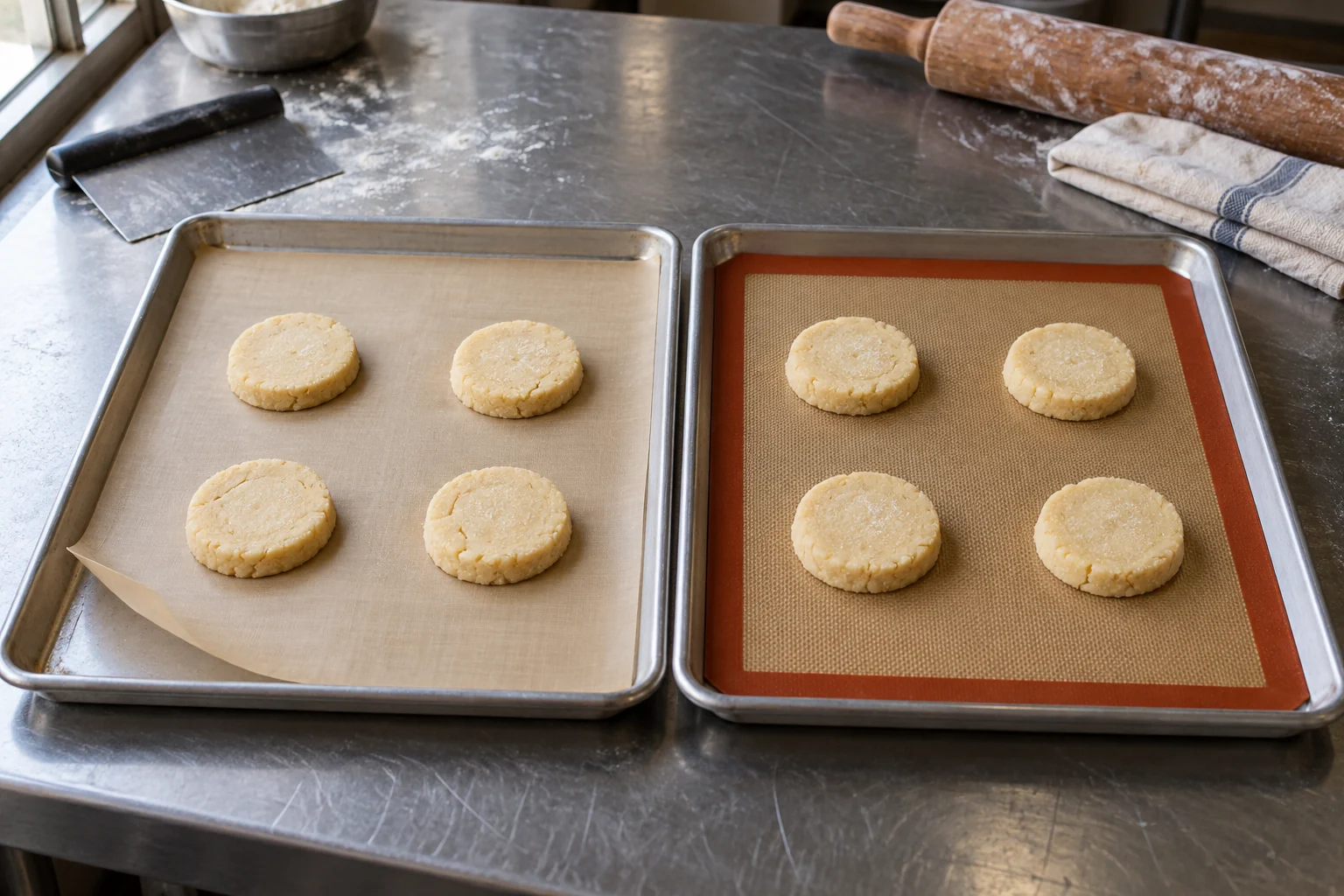
The short answer
PTFE for a thin liner.
Silicone for a finished mat.
A PTFE baking sheet is a useful choice for a thin, flexible nonstick liner and custom cut-sheet formats. A silicone baking mat suits repeated tray work, pastry handling and printed deposit guides. Both need the right heat rating, tray fit and cleaning routine.
For cookies and macarons, approve the bake before switching. Neither coating makes every recipe release, spread or brown the same way.
01 / Side by side
PTFE vs silicone: the main differences.
This guide compares solid PTFE-coated fiberglass baking sheets with solid fiberglass-reinforced silicone baking mats. Open mesh liners and countertop-only pastry mats belong in a separate comparison.
| What changes | PTFE baking sheet | Silicone baking mat |
|---|---|---|
| Food-contact surface | PTFE coating on a woven fiberglass fabric. | Silicone over a reinforcement, commonly fiberglass. |
| Typical format | Thin, flexible sheets; selected grades also supplied as rolls. | Finished mats with a defined perimeter; plain or printed. |
| Thickness | Thin sheet grades suit a low-profile liner. Specify the actual gauge. | Generally thicker than a thin PTFE sheet. Specify the finished gauge. |
| Tray fit & cutting | Factory-cut sheets or an approved cuttable grade. Edge quality matters. | Order a finished size. Do not trim a fiberglass-reinforced mat. |
| Baking behavior | A thin release layer between the food and pan. | A thicker interface that can change base color, spread and setting. |
| Heat limit | Use the rating and exposure conditions of the selected sheet. | Use the rating and exposure conditions of the finished mat. |
| Cleaning | Cool, wash, dry and inspect; avoid abrasive tools and sharp folds. | Cool, wash, dry and inspect; protect the surface and finished edges. |
| Useful starting point | Custom liner dimensions and repeated work needing a thin release sheet. | Repeated tray baking and pastry work needing a finished, thicker mat. |
02 / Construction
Similar reinforcement. Different release surfaces.
PTFE is polytetrafluoroethylene, the release coating on a PTFE baking sheet. Silicone mats use a silicone surface around a supporting layer. In both constructions, fiberglass helps the liner hold its dimensions. The food rests on the coating.
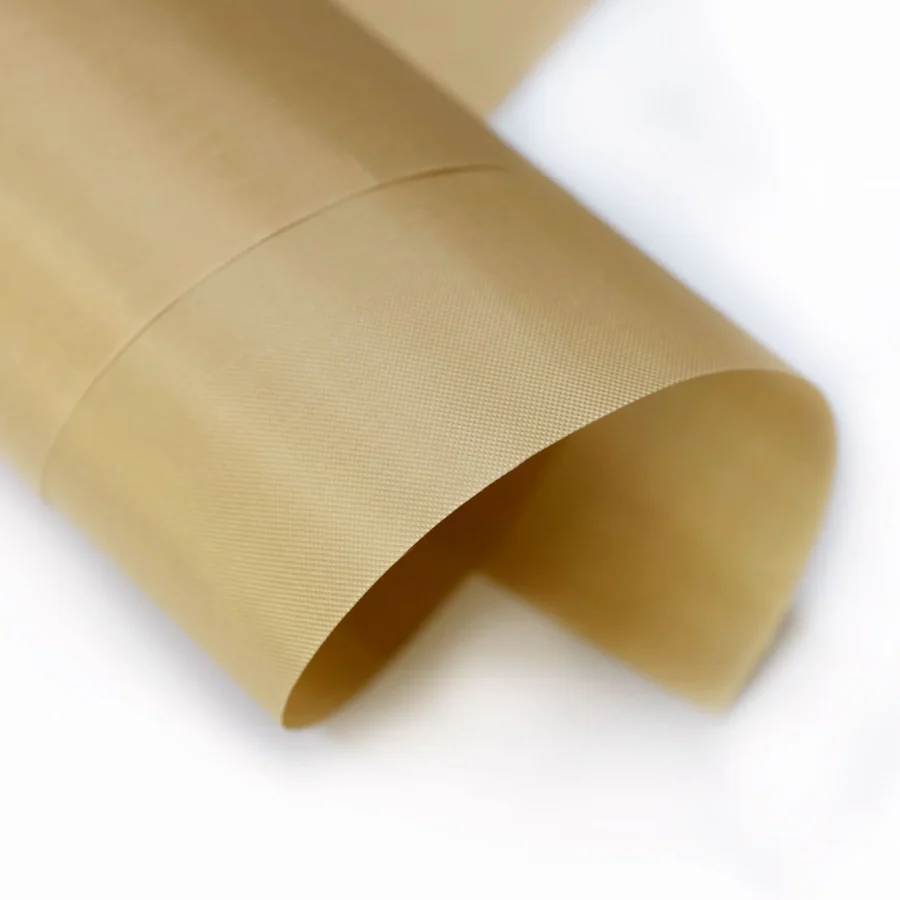
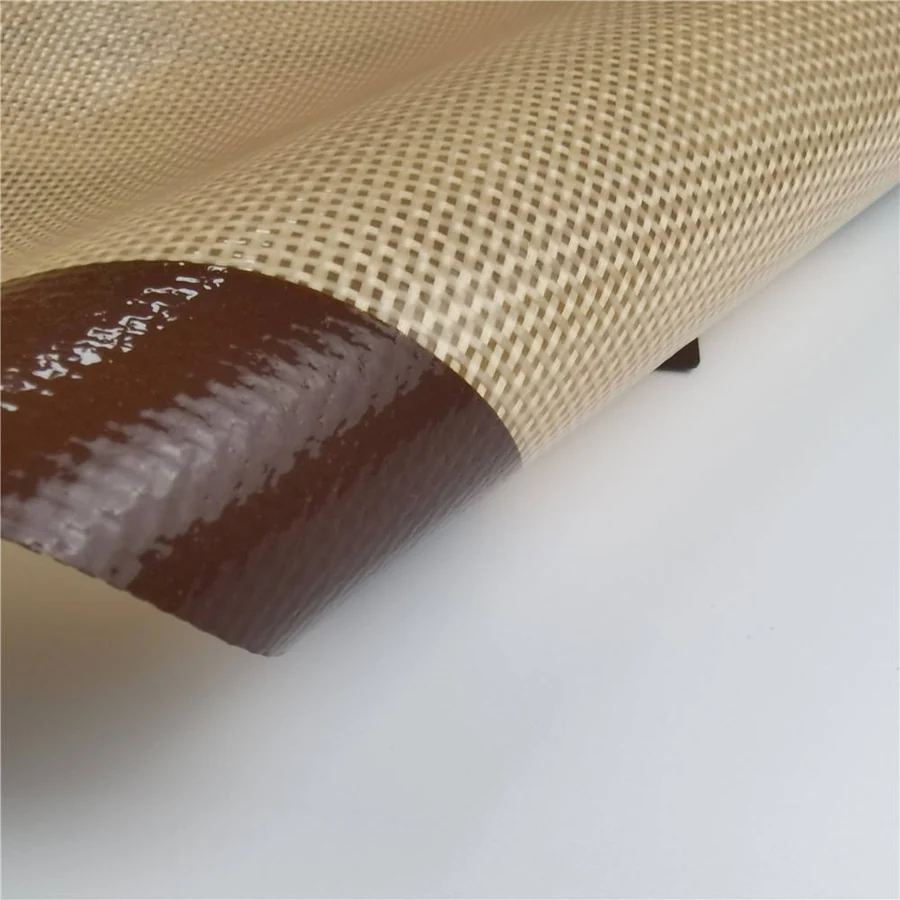
Specify thickness in the order.
“Reusable baking liner” leaves too much open. Our PTFE baking and grill mat listing includes 0.08, 0.12 and 0.20 mm options; our full-sheet silicone mat listing includes 0.60 and 0.70 mm options. These illustrate the difference in format. They are not universal gauges for either material.
A thicker mat changes the layer between the food and pan. That can change base setting, color and spread. Thickness alone cannot predict the finished bake: coating, pan material, dough and oven conditions work together.
A solid liner can show its reinforcement through the coating and still have a continuous surface. Specify actual openings when airflow is part of the brief.
03 / Application
Choose the liner by what leaves the oven.
Cookies & biscuits
Run the same dough on both.Compare diameter, edge set, underside color and release after cooling. Keep portion weight, dough temperature and pan type fixed. A thin PTFE sheet is a useful trial option when a thicker mat changes the base finish; it does not guarantee a crisper cookie.
Macarons & deposited pastry
Choose the recipe surface first.A printed silicone mat helps position deposits. Approve shell release, feet, base finish and cooling time before approving the template. A printed circle controls spacing; it does not establish baking performance.
Sticky pastry & bench work
Start with a solid silicone mat.A thicker finished mat is a practical starting point for repeated pastry handling. For hot sugar or other high-temperature work, match the actual contact temperature to the permitted use. Keep knives and cutters off reinforced mats.
Roasting & repeat tray lining
Evaluate a thin PTFE sheet.Start with a food-contact baking grade cut to the tray. Check release, residue removal and edge condition through normal wash cycles. A grill mat, an industrial release fabric and an oven baking liner need their own use specifications.
Bread & crisp pastry bases
Treat airflow as a separate choice.Both solid liners cover the pan. If the process needs underside ventilation, evaluate an open mesh liner with a compatible perforated tray. A visible fabric weave beneath a continuous coating is not an airflow opening.
Need a disposable option for shaped pans or fast changes? Read silicone baking mats vs parchment paper →
04 / Heat & dimensions
Check the oven cycle. Measure inside the tray.
Our PTFE-coated fiberglass sheet lists an upper temperature of 260°C / 500°F. Our full-sheet silicone baking mat lists 230°C / 446°F. Apply those limits to the selected items, together with their permitted exposure time and oven placement. A raw material temperature rating does not approve the finished liner for every cooking setup.
Use a supporting tray. Keep either liner away from direct flame and heating elements. Do not place it on the oven floor or assume it is suitable for a broiler. Include high-temperature stages and oven cleaning procedures when describing the process.
Measure the flat interior.
Record usable length, width and corner radius. A pan marked 40 × 60 cm does not automatically need a liner with the same external dimensions. The liner must lie flat, without climbing the sides or covering required vents.
Measure your sheet panOrder the edge you need.
Buy reinforced silicone mats in their finished size; do not trim them in the bakery. For PTFE, order factory-cut sheets or confirm that the selected grade permits on-site cutting. Inspect cut edges for fraying and exposed fibers before use.
05 / Daily operation
Both liners need a return-to-tray routine.
Allow the liner to cool, remove residue, wash with a compatible detergent and non-abrasive tools, then dry completely. Confirm dishwasher compatibility for the actual item. Do not cut food on either surface, scrape it with a metal edge or pack it with sharp folds.
Inspect during cleaning. Retire liners with cuts, frayed edges, exposed reinforcement or damaged coating. Follow the bakery’s allergen cleaning plan, and dedicate liners where the process requires it. Store flat or loosely rolled as directed.
Compare cost per accepted tray.
Landed liner cost ÷ actual completed uses
+ washing, drying and handling per cycle
+ any extra product loss per cycle
Calculate PTFE and silicone separately using the same tray size and saleable output. A cheaper sheet can cost more if it is damaged early; a more expensive mat can cost more if cleaning slows the station. Record uses and retirement reasons instead of buying against a promised cycle count.
The oven load is only part of the quantity required. Add liners cooling with product, liners in washing and drying, and a clean reserve for the next load.
06 / Sample approval
Test the bake and the next load.
A swatch shows texture. A tray-size sample shows fit, loading and handling. Request both constructions in the dimensions you intend to order, then run a controlled comparison.
Match the trays and loading.
Use full-size samples, one recipe batch, equal portions and matched pans. Keep the starting pan temperature and oven program fixed. Swap rack positions on a repeat run to check for oven-position bias.
Check the product after cooling.
Record base color, dimensions, release, breakage and saleable pieces per tray. For macarons, add feet and shell base condition. Photograph the results and record any later recipe or oven adjustment separately.
Time the return to production.
Measure unloading, cooling, washing, drying and reloading. Inspect edges and surfaces after normal handling. A liner that releases well but cannot return clean in time needs more rotation stock.
Keep an approved reference.
Agree the dimensional tolerances, acceptable bake, release and visible defects. Keep the approved sample and trial record with the specification. Short trials qualify the process; they do not prove hundreds of future uses.
07 / Purchase specification
Order a defined construction.
For PTFE sheets
- Food-contact baking grade and coated fabric construction
- Finished thickness and tolerance
- Cut size, shape and edge condition; or roll width and length
- Permitted heat exposure, placement and cleaning
- Sheets per pack, roll packing and carton quantity
For silicone mats
- Solid or open mesh surface and reinforcement
- Finished size, thickness and corner radius
- Perimeter finish, color and printed template
- Permitted heat exposure, placement and cleaning
- Bulk or retail packing and care instructions
Include the food, oven cycle, destination market and required food-contact documentation in the brief. Tie document scope to the selected construction, including any printing. For private-label programs, approve the liner before finalizing logos, sleeves or retail boxes.
For a broader material shortlist, use the oven baking mat sourcing guide →
08 / Common questions
PTFE and silicone baking liner FAQ.
Which is better: a PTFE baking sheet or a silicone baking mat?
Choose a thin PTFE sheet when you need a flexible release liner or custom cut-sheet format. Choose a finished silicone mat for repeated tray baking, pastry handling or printed deposit guides. For cookies and macarons, select the surface by the actual recipe result and cleaning routine.
Is a PTFE baking sheet the same as a silicone mat?
No. A PTFE baking sheet uses a PTFE release coating, commonly on fiberglass fabric. A silicone baking mat uses silicone, often around a fiberglass reinforcement. The reinforcement can be similar while the food-contact coating, thickness and edge construction differ.
Can PTFE baking sheets and silicone mats be cut to size?
Order both in the required finished dimensions. Some PTFE sheet grades permit cutting under their use instructions; check the approved grade and edge requirements first. Do not trim a fiberglass-reinforced silicone mat, because cutting breaks its finished perimeter and can expose the reinforcement.
Does PTFE make cookies crispier than silicone?
A thinner liner changes the interface between dough and pan, but crispness also depends on the recipe, pan, oven cycle and cooling. Test matched portions on both surfaces and compare the cooled underside and texture. Do not choose a liner from a crispness claim alone.
What temperature can each liner withstand?
BakewareLink lists its PTFE-coated fiberglass sheet up to 260°C (500°F) and its full-sheet silicone mat up to 230°C (446°F). These are limits for those listed items, not every PTFE or silicone product. Confirm exposure time, placement and permitted oven conditions for the selected specification.
Can either liner replace a metal baking tray?
No. A flexible sheet or mat needs appropriate support. Place it on the intended tray, within the pan’s flat interior. Do not place it on an oven floor, over a heating element or in direct flame; a baking temperature rating does not authorize those placements.
How many times can a reusable baking liner be used?
Useful life depends on the grade, bake, washing and handling. Record actual completed cycles and retire liners with cuts, fraying, exposed fibers or damaged coating. Compare cost using observed service life rather than a universal reuse count.
Explore the formats
Start with the liner your process needs.
Prepare a sample brief
Send the tray dimensions.
Tell us what you bake.
Share your current liner and the result you want to improve. BakewareLink can help organize PTFE sheet and silicone mat options for sampling and a wholesale quotation.
- Flat tray dimensions or a drawing
- Food, oven temperature and cycle time
- Preferred construction and cleaning method
- Sample needs and estimated order volume
- Destination market, documentation and packing